
3D Digitization of the swedish cyprus collection
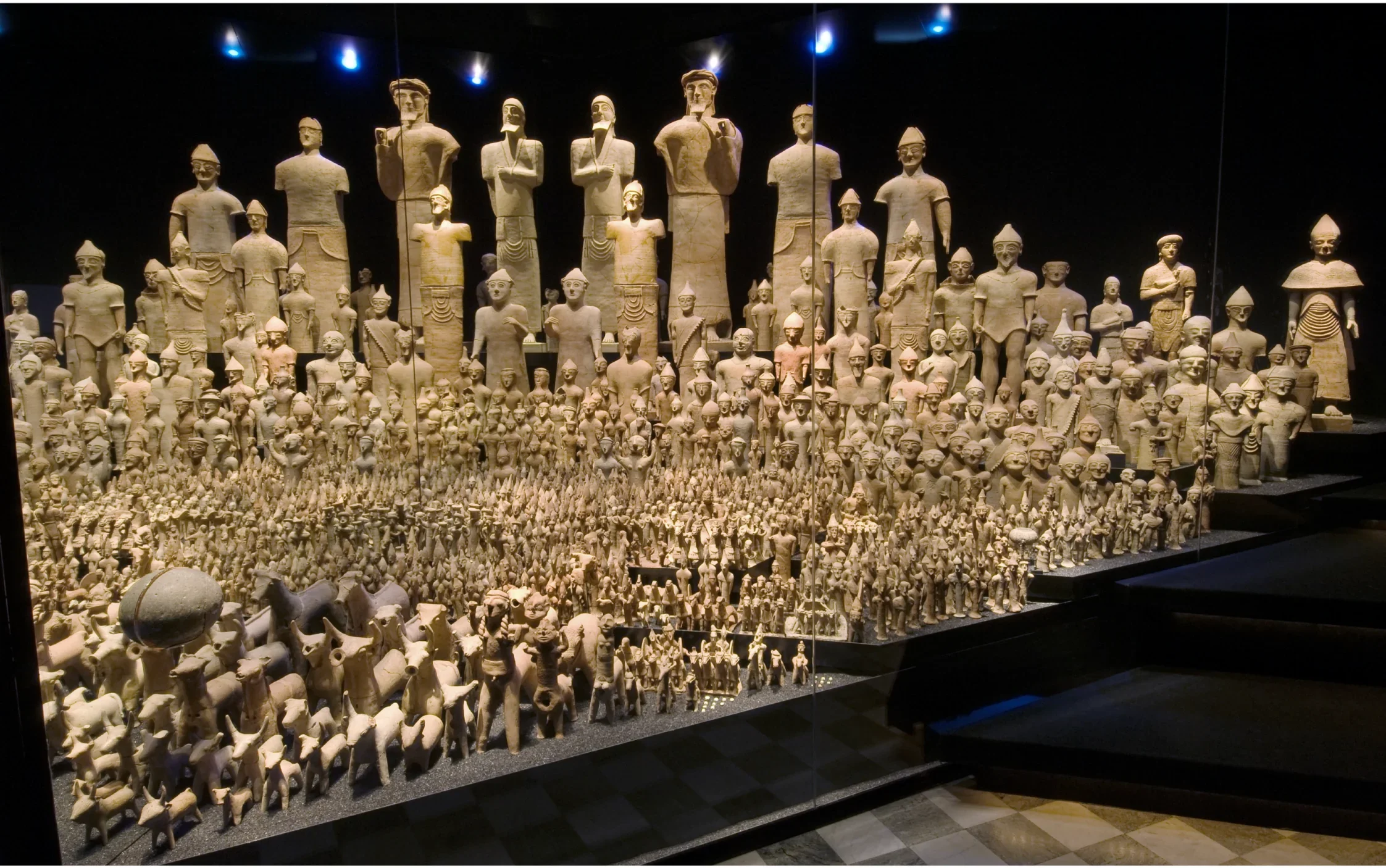
The Museum of the Mediterranean and Near Eastern Antiquities (belonging to the Swedish National Museums of World Culture) in Stockholm houses the largest collection of Cypriote antiquities outside Cyprus. The collection is based on and assembled from the archaeological finds of the Swedish Cyprus Expedition (SCE) in 1927 – 1931 led by Einar Gjerstad.
As an initial step, a representative selection of 20 challenging objects - primarily Cypriot vases with varying shapes and materials - was digitized to define a robust methodology for the large-scale 3D digitization of the world’s largest Cypriot collection outside Cyprus. CultArm3D provided the autonomous, calibrated capture pipeline ensuring scientific reliability and repeatability.
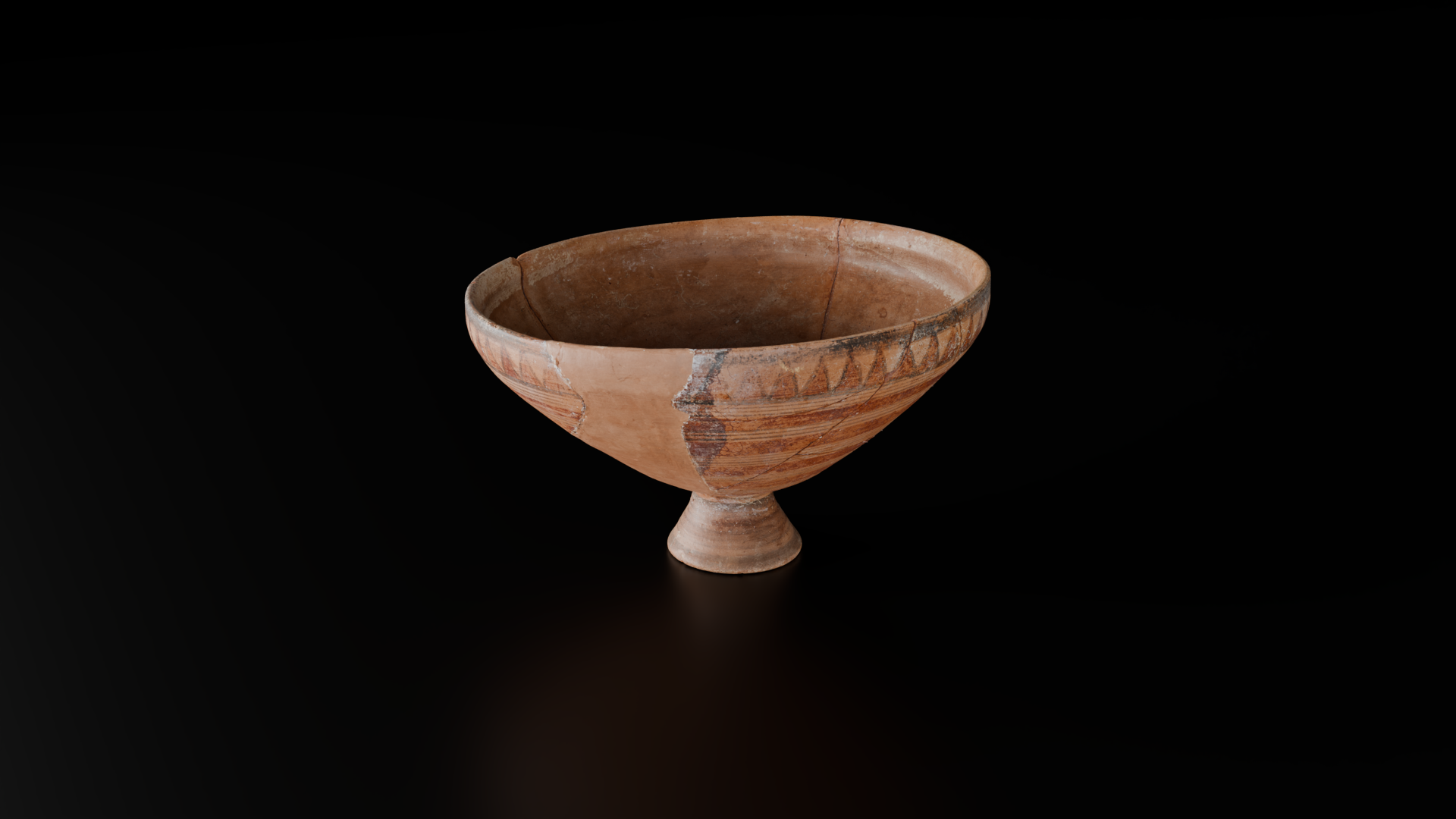
M. 075:013
bowl
-
Cypro-Archaic II
(600-450 BC) -
Wide, open, handleless forms are typical of Cypriot Archaic I bowls. When considered alongside the red decoration, these characteristics may indicate Phoenician influence.
-
Optimized Model
Geometry: 80k Polygons
Texture Resolution: 8K
File Size: 45MB
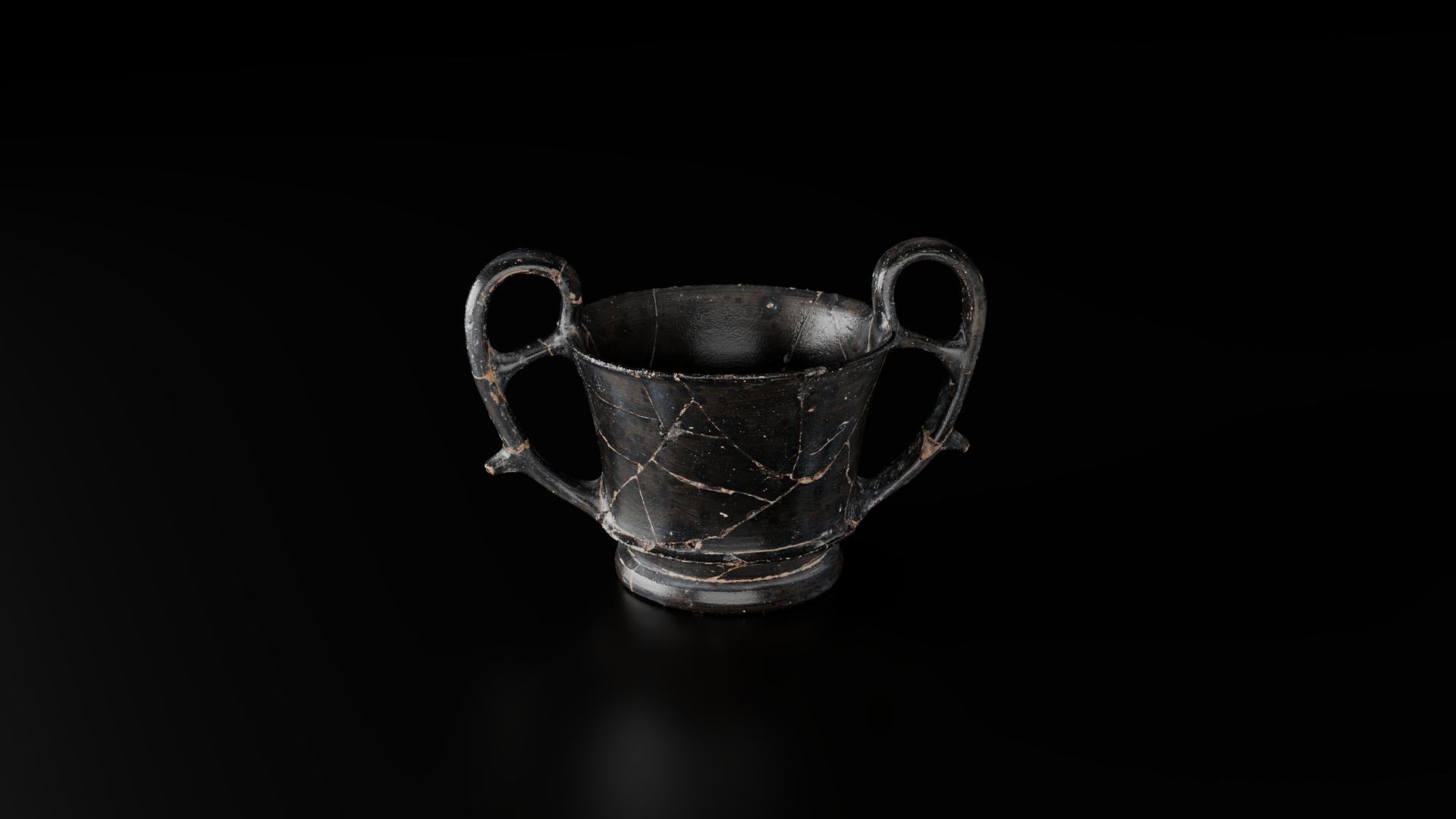
M. 058:081
kantharos
-
Cypriot Classical
(474-325BC) -
The present object is a kantharos, a characteristic Classical votive vessel that later became closely associated with wine consumption. Linear grooves on the interior attest to its manufacture on a pottery wheel. The fine ware is finished with a glossy black slip (a form of glaze), while areas of repair reveal the underlying yellow clay body.
-
Optimized Model
Geometry: 80k Polygons
Texture Resolution: 8K
File Size: 22MB
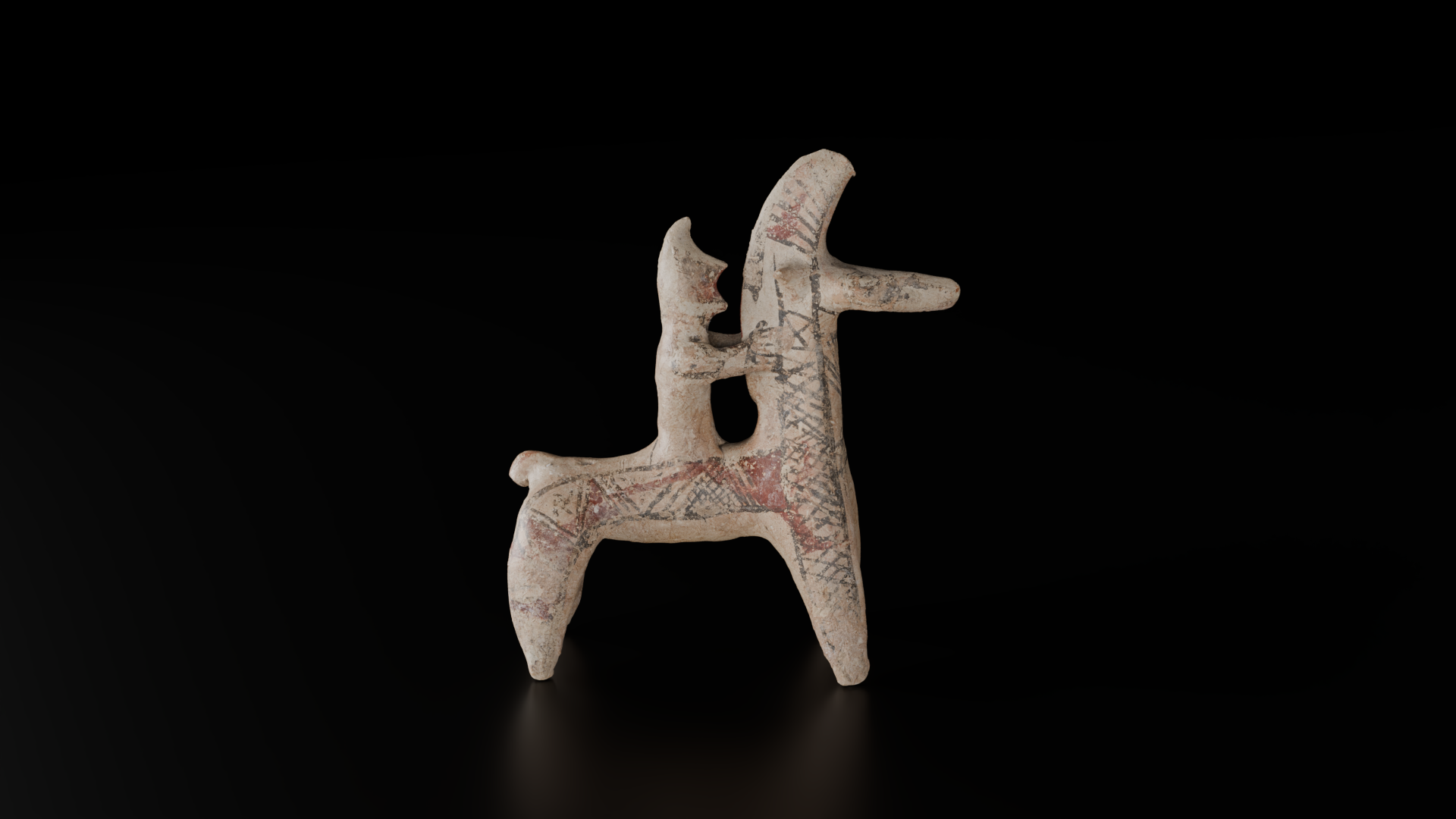
NM Ant 1743
figurine, sculpture
-
Late Cypro-Geometric III
(850-700 BC) -
Figurines of varying scale were produced during the Archaic period, including life-sized clay sculptures that circulated through trade. The present object is a solid anthropomorphic equestrian figurine. Its surface is decorated with red and black painted geometric motifs.
-
Optimized Model
Geometry: 200k Polygons
Texture Resolution: 8K
File Size: 51MB
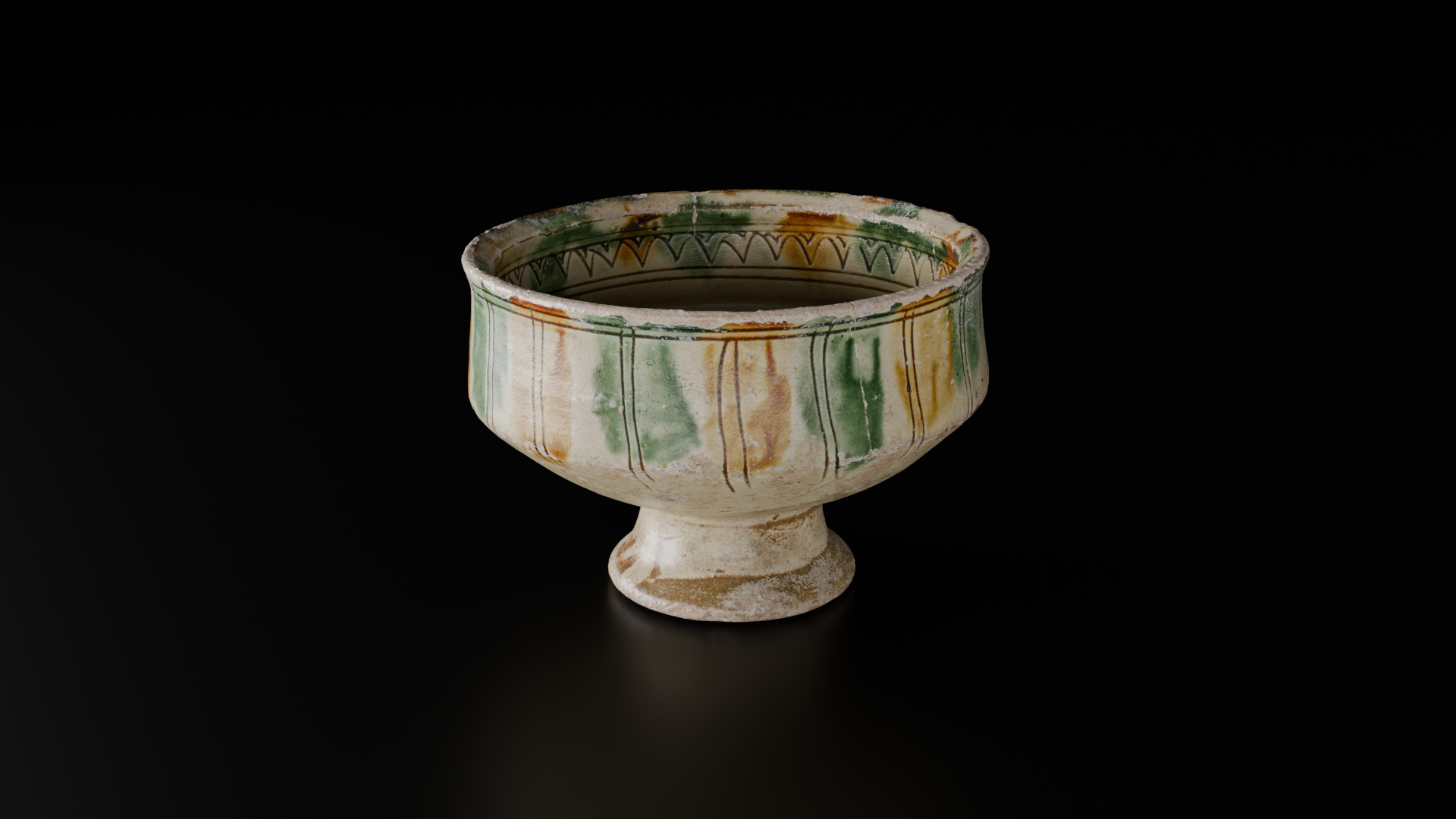
MM 1968:083
bowl
-
Midieval Times
14th century AD -
By the 13th century AD, glazed pottery comparable to modern glazing techniques is attested in Cyprus. The present bowl was decorated using the sgraffito technique, whereby the surface was incised or scraped to reveal the layers beneath.
-
Optimized Model
Geometry: 200k Polygons
Texture Resolution: 8K
File Size: 31MB
A. 019:005
plate
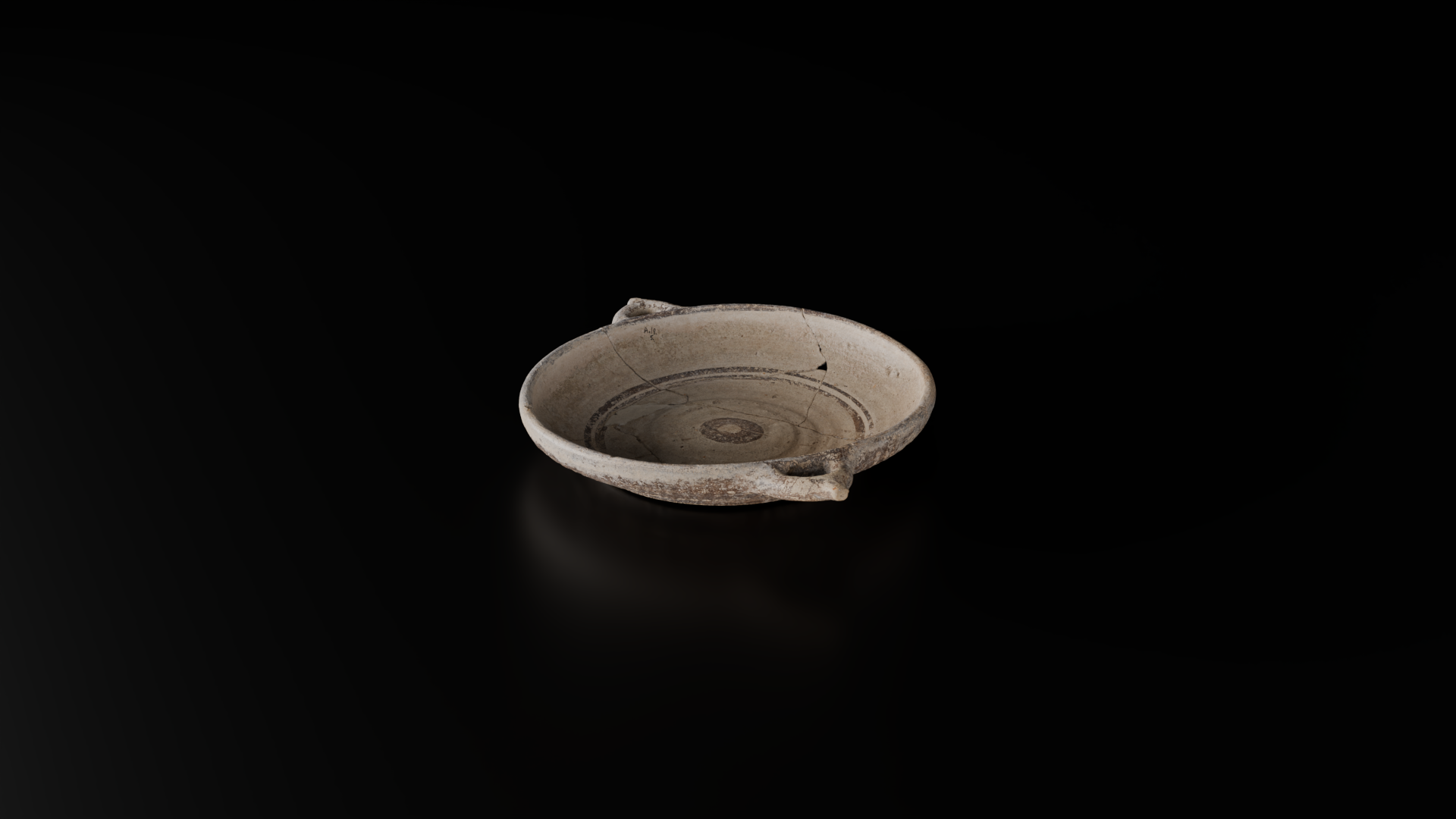
-
Cypro-Geometric I-II
(1050-850 BC) -
This plate dates to the Early Iron Age and is typologically attributable to the Cypro-Geometric period, during which such forms were produced exclusively. The characteristic bichrome decoration in dark red and grey geometric patterns is also indicative of this period.
-
Optimized Model
Geometry: 80k Polygons
Texture Resolution: 8K
File Size: 54MB
L. 306A:012
idol
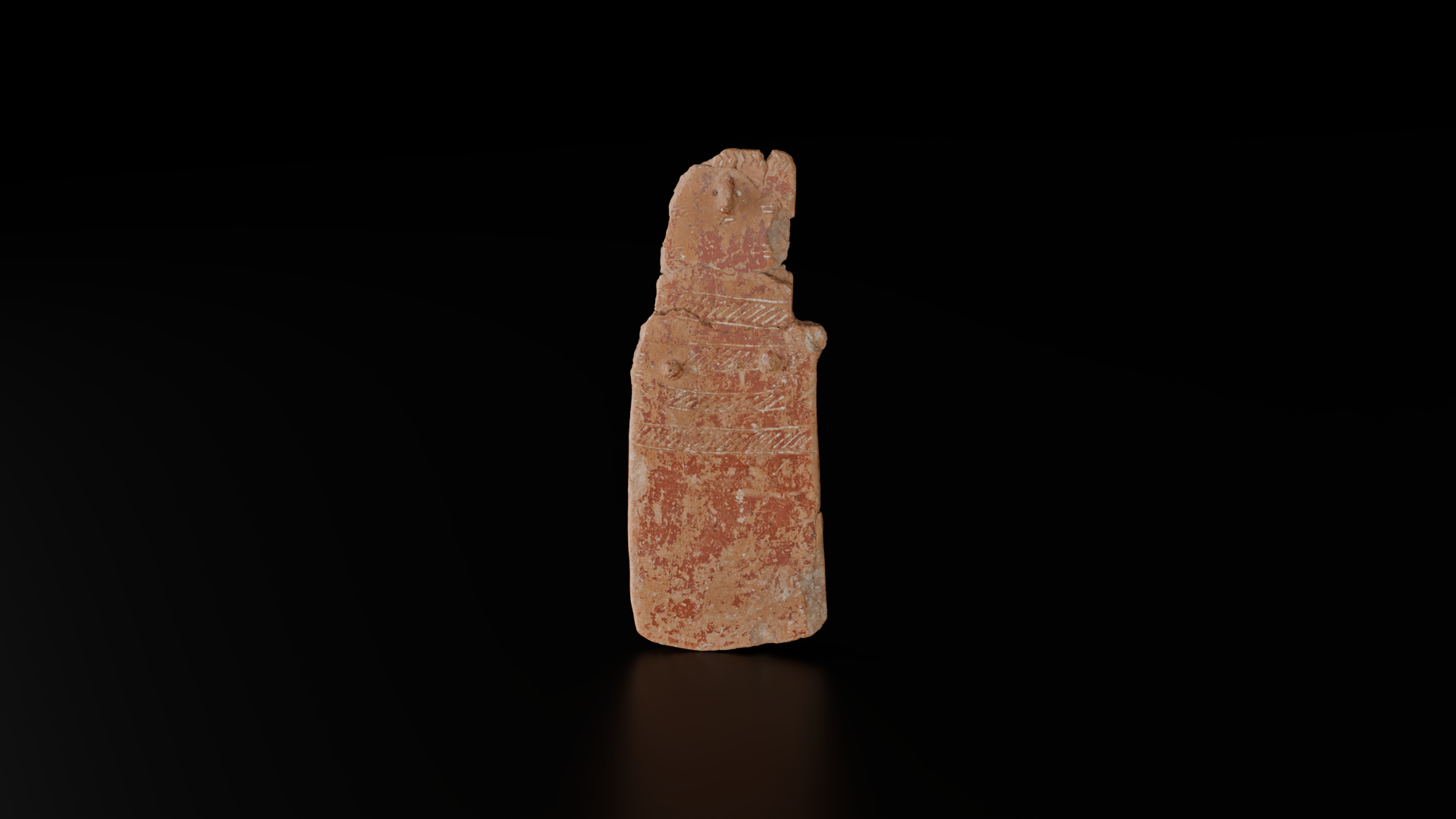
-
Early Cypriot II-III
(1950-1800 BC) -
The earliest freestanding representations of the human form in Cyprus are known as plank idols. This stylized female figure is shaped from a clay slab and coated with a red lustrous slip. Engraved details include the eyes and mouth, as well as horizontal banding across the chest.
-
Optimized Model
Geometry: 80k Polygons
Texture Resolution: 8K
File Size: 31MB
P. 007:039
amphora
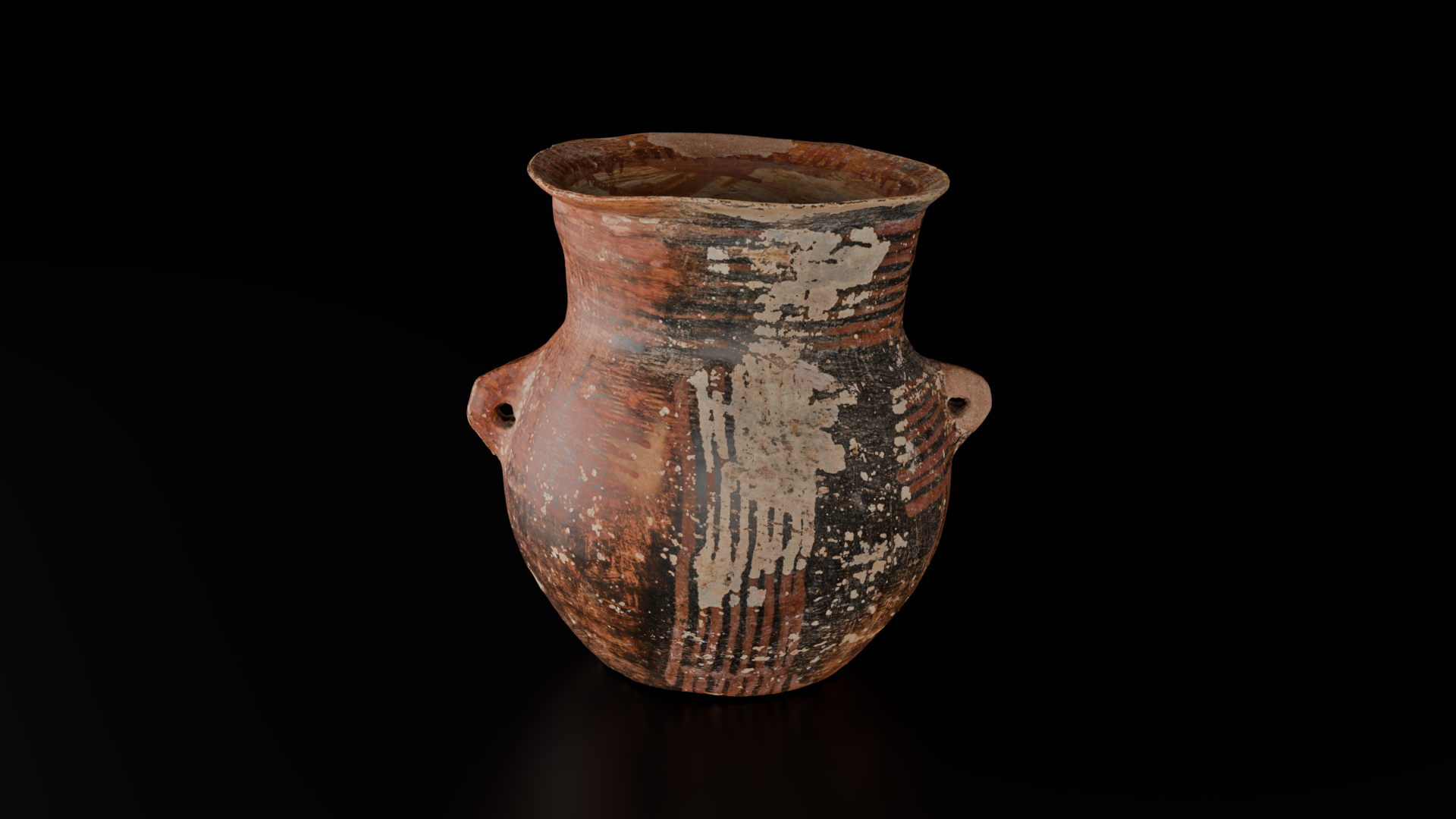
-
Middle Cypriot III
(1700-1600 BC) -
This amphore is a type of red polished ware that is a typological indicator for the early and middle bronze age. The complex banded decoration is typical for northern Cyprus, where also the findspot Paleoskoutella lies. The pot is adorned with a black lustrious slip and red painted bands and two vertical stringholes on the vessels shoulder.
-
Optimized Model
Geometry: 80k Polygons
Texture Resolution: 8K
File Size: 22MB
E. 013:098
tankard
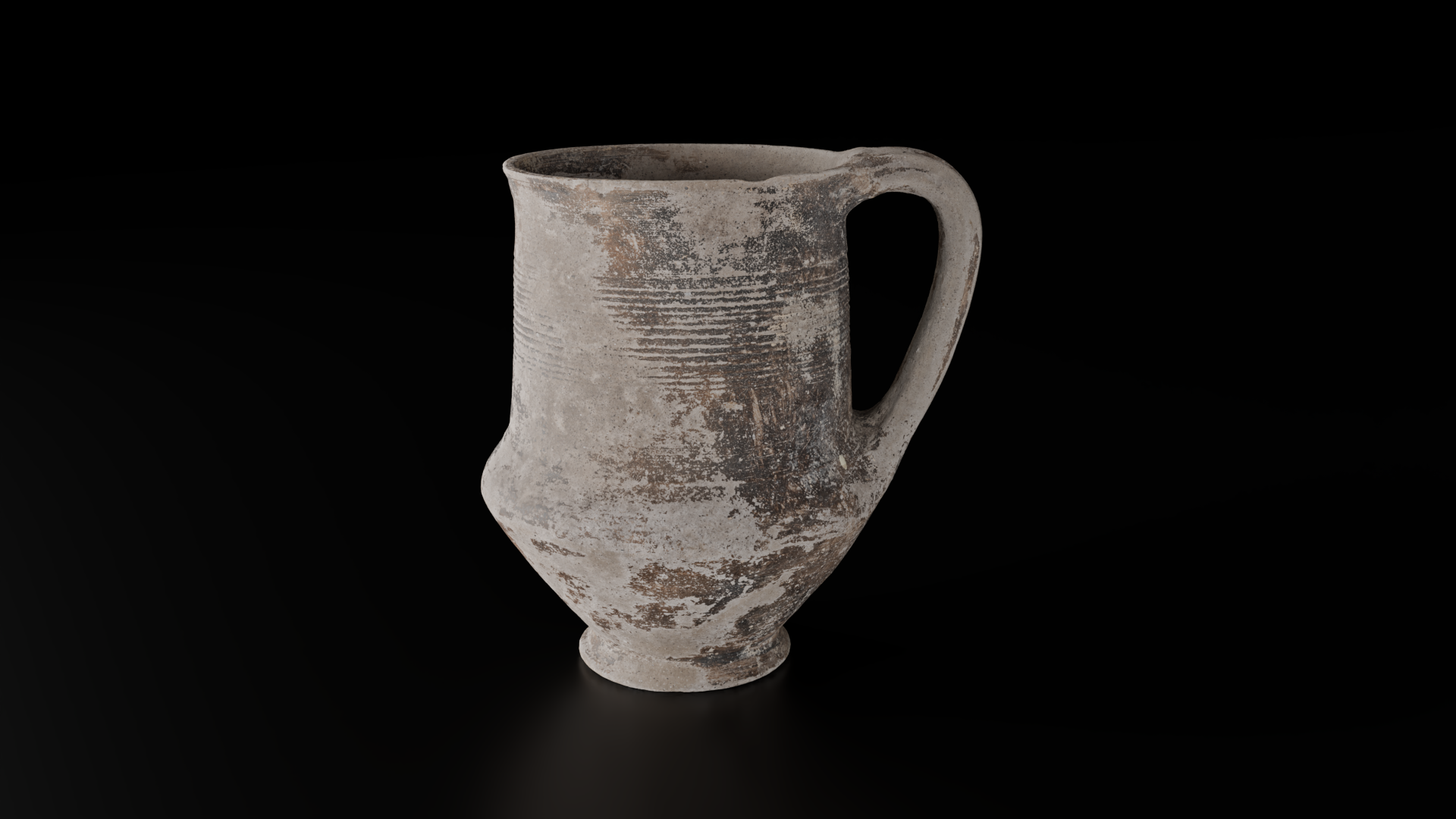
-
Late Cypriot I-III
(1600-1200 BC) -
This wheel-made tankard, executed in shades of white, is characteristic of the Late Cypriot period. The vessel is defined by a carinated shoulder ending in a ring base. Straight relief lines encircling the neck constitute further typological indicators.
-
Optimized Model
Geometry: 200k Polygons
Texture Resolution: 4K
File Size: 25MB
Augmented Reality supported on mobile devices with AR-ready browsers, including Chrome, Safari, Edge and others.
Some models on this page have been made available in high quality and require a fast internet connection as well as a powerful output device!

About the PROJECT
The aim is to digitize finds from the collection using photogrammetry, laser scanning and robotics with Artificial Intelligence for the protection and preservation of the artefacts as well as for their research and exhibition purposes. The digital twins will enhance the exchange and enable the return of cultural heritage in the digital form to the island. The Cypriot partner takes care of the technical part of the finds that the museum offers aid and access to the collection. The agreement to digitize the finds from the collection covers academic cooperation and exchange, teaching and research as well as science and technology, in accordance with the principles of mutual independence, reciprocity, and equity.
For more information, please visit: https://www.medelhavsmuseet.se/en/exhibitions/cyprus-7000-years-of-history/